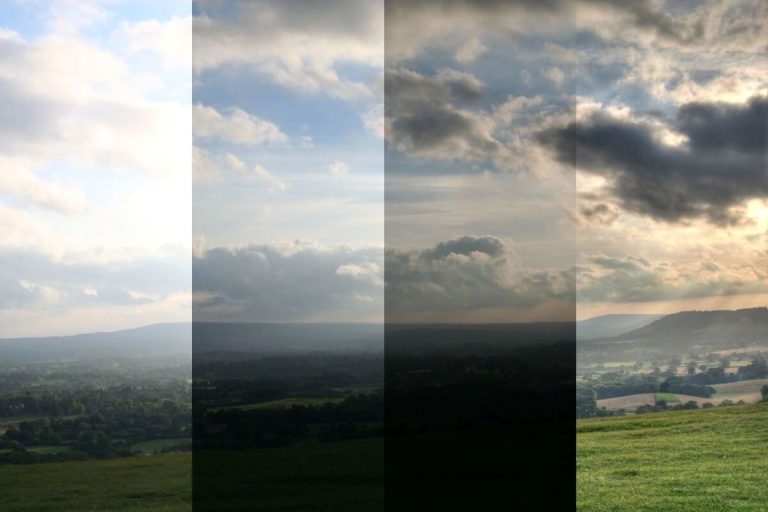
Is HDR Photography Dead? The Honest Answer in 2026
No. What died is the overcooked 2010s tone-mapping look — glowing edges, radioactive skies, the “HDR style” everyone mocked. The technology itself is thriving: bracketed HDR is the delivery standard in real estate photography, a landscape essential, and the hidden engine inside every phone’s night mode. HDR isn’t dead; bad taste in HDR is.
The Case That HDR Is Dead
More than a decade ago, influential photography blogs were already writing HDR’s obituary. The argument went like this: every HDR image looked the same — crunchy textures, glowing halos around buildings, skies turned teal and orange. Viewers grew tired of it, tastes moved on, and “HDR” became shorthand for bad editing. Some writers declared the whole technique finished.
They had half a point. Scroll through photo-sharing sites from the early 2010s and the stereotype is real: aggressive tone mapping applied like a filter, on every subject, regardless of whether the scene needed it.
What Actually Died: A Look, Not a Technology
Here is the distinction the obituaries blurred: what died was a style, not a technique. The garish “grunge HDR” look was one extreme application of tone mapping — one operator pushed to maximum on every photo. Tone mapping itself is simply the necessary step of fitting a high-dynamic-range capture into a viewable image. Done conservatively, it is invisible. Nobody looks at a well-balanced real estate interior and thinks “that’s HDR” — and that is exactly the point.
Blaming bracketing for bad tone mapping is like blaming ovens for burnt toast.
Where HDR Lives Today
Strip away the 2010s aesthetic and HDR is quietly everywhere:
- Real estate: bracketed HDR is the delivery standard. Agents expect bright windows and clean interiors in the same frame — see our real estate HDR workflow.
- Landscape: sunrise and sunset scenes routinely exceed what a single frame can hold.
- Phones: night mode and computational photography are multi-frame HDR under the hood — your phone brackets every time you tap the shutter in low light.
- Displays: HDR monitors keep getting cheaper, and true HDR photo delivery is becoming practical.
The Natural School: Our Position
Luminance HDR was built for the opposite end of the spectrum from grunge HDR: control. With multiple tone mapping operators and conservative starting points — see our natural HDR settings guide — the goal is an image that looks the way the scene felt: detail everywhere, nothing screaming for attention. HDR done well doesn’t announce itself.
Dead vs Alive: A Scorecard
| The claim | Verdict | Why |
|---|---|---|
| The crunchy, haloed “HDR look” | Dead | A 2010s aesthetic; modern taste and better defaults killed it |
| Bracketed HDR for real estate and interiors | Alive | Still the delivery standard — clients expect it |
| Single-image “HDR” filters | Dying | They fake dynamic range that was never captured |
| Multi-frame HDR in phone cameras | Alive | Every night-mode shot is HDR under the hood |
Frequently Asked Questions
Do professional photographers still use HDR?
Yes — in the genres where dynamic range is the job. Real estate, interiors, and architecture photographers bracket as a matter of routine, and landscape photographers rely on it for high-contrast light. What professionals abandoned is the over-processed look, not the technique.
Why does HDR have a bad reputation?
Because its most visible era was also its most abused one. In the early 2010s, aggressive tone mapping presets made every photo look like a video game screenshot, and “HDR” became shorthand for that style. The reputation stuck to the name even as the technique matured.
Is my phone’s night mode HDR?
Essentially, yes. Night mode captures multiple frames at different exposures and merges them — which is bracketing and HDR merging, automated. The difference from desktop HDR is control: your phone picks the settings, while software like Luminance HDR lets you pick them yourself.
Should I still learn HDR photography in 2026?
If you shoot real estate, interiors, architecture, or high-contrast landscapes, yes — it is a working skill, not a fad. If you only shoot portraits in soft light, you may never need it. Match the tool to the subject.
What is the difference between real HDR and an HDR filter?
Real HDR merges multiple exposures that actually captured different brightness levels, so the detail is real. An “HDR filter” stretches a single image to imitate the look — it cannot recover highlights or shadows that were never recorded. See our single-RAW HDR guide for the honest limits.
Disclosure: Luminance HDR is free and open source (GPLv2).