Flambient vs HDR for Real Estate: Which Is Better? (2026)
Ask ten real estate photographers how they light an interior and you will start an argument. The two camps are HDR — bracketed exposures merged in software — and flambient — a flash shot blended with an ambient exposure by hand. Both solve the same problem (bright windows, dark rooms), but they differ wildly in speed, quality ceiling, and skill required. This guide explains both honestly, including what free tools like Luminance HDR can and cannot do.
What Is Flambient?
Flambient is a manual technique, not a software preset. You shoot (at minimum) two frames from a tripod without moving the camera: one ambient exposure for the window view and natural light, and one (or more) flash exposures bounced off the ceiling or walls to fill the room. In Photoshop or GIMP you then layer them and mask in the best parts of each — clean windows from the ambient frame, evenly lit interior from the flash frames.
The result is the most natural-looking interior photography possible: true window views, accurate colors, no tone-mapping artifacts. The price is time — 15–40 minutes of manual masking per image for a skilled retoucher — plus the gear (speedlights, triggers) and the skill to light a room without harsh shadows.
What Is HDR (for Real Estate)?
HDR for real estate means shooting 5–7 bracketed exposures and merging them in software like Luminance HDR or Photomatix Pro. The software aligns the frames, merges them into a high-dynamic-range image, and tone-maps it down to a viewable photo. With batch processing, a full day’s shoot merges itself while you do something else.
HDR is dramatically faster than flambient — minutes per image instead of tens of minutes — but the quality ceiling is lower. Windows can still blow out or shift color, and aggressive tone mapping produces the “radioactive glow” agents hate. Disciplined settings (see our natural HDR settings guide) close most of the gap.
Flambient vs HDR at a Glance
| Factor | Flambient | HDR |
|---|---|---|
| Image quality ceiling | Highest — true window views, accurate color | Very good with disciplined settings |
| Speed per image | 15–40 min of manual masking | 2–5 min, mostly automated |
| Learning curve | Steep — flash technique + manual masking | Moderate — bracketing + software |
| Gear needed | Speedlights, triggers, light stands | Tripod only |
| Batch-friendly | No — every image is handwork | Yes — run dozens of sets unattended |
| Best price tier | Luxury listings ($1M+), where quality sells | Volume listings, where speed pays |
An Honest Note on What Luminance HDR Can Do
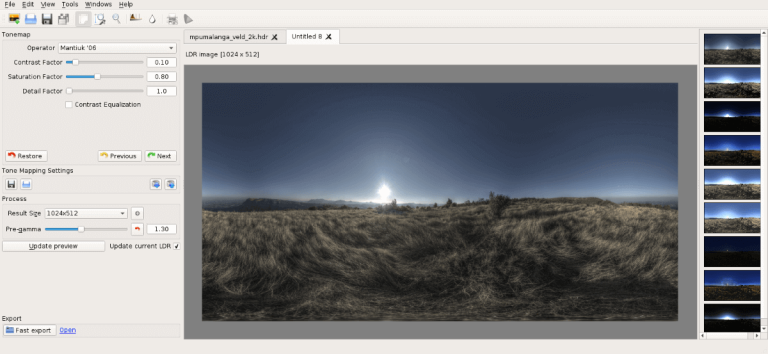
Luminance HDR handles the HDR half of this comparison: merging bracketed exposures, deghosting, batch processing, and tone mapping — all free. It does not do flambient’s flash blending; that step is manual layer masking in Photoshop or GIMP, and no HDR merger automates it. We won’t pretend otherwise. If you shoot flambient, use Luminance HDR for any bracketed ambient frames, then do the flash blend by hand where it belongs.
How to Choose: Three Tiers
1. Volume listings (most agents, most markets): HDR
When you shoot 3–5 homes a day at a few hundred dollars each, speed is the business model. Bracket 5–7 frames, batch merge in Luminance HDR or Photomatix, deliver in 24 hours. Follow our real estate HDR workflow for the full pipeline.
2. Luxury listings: Flambient
When the commission justifies half a day per home, flambient’s quality ceiling wins. The manual blend gives window views and color accuracy that no automated merge fully matches — yet.
3. The hybrid: HDR base + flambient windows
Many working pros merge the brackets for the room, then mask in just the window from the ambient frame — a 2-minute version of flambient that fixes HDR’s weakest spot. This is also exactly what our window pull tutorial teaches.
Frequently Asked Questions
Is flambient better than HDR?
For pure image quality, yes — a skilled flambient blend beats any automated HDR merge on windows and color accuracy. For business efficiency, HDR wins by a large margin. Most photographers choose based on what the listing’s price point justifies.
Can Luminance HDR do flambient?
Only the HDR half. Luminance HDR merges bracketed exposures beautifully, but flambient’s flash-plus-ambient layer blending is manual work in Photoshop or GIMP. Use Luminance HDR for the bracket merge, then blend the flash frames by hand.
Do I need flash gear to start real estate photography?
No. Start with HDR — a tripod and bracketing are enough for the volume market. Add speedlights later if you move up to luxury listings where flambient pays off.
Why do my HDR interiors look worse than flambient examples online?
Usually three things: over-aggressive tone mapping (the “glow”), white balance shifts between brackets, and blown windows that were never recovered with a window pull. Fix those three and HDR gets most of the way to flambient quality at a fraction of the time.
Can I mix HDR and flambient in one listing?
Yes, and many pros do — HDR for standard rooms, flambient for the hero shots (living room, master bedroom, exterior twilight). Price the flambient frames as an add-on.
Luminance HDR is free and open source (GPLv2).